Blog
Utility Knife Technique: Blade Depth, Straight Cuts and Faults

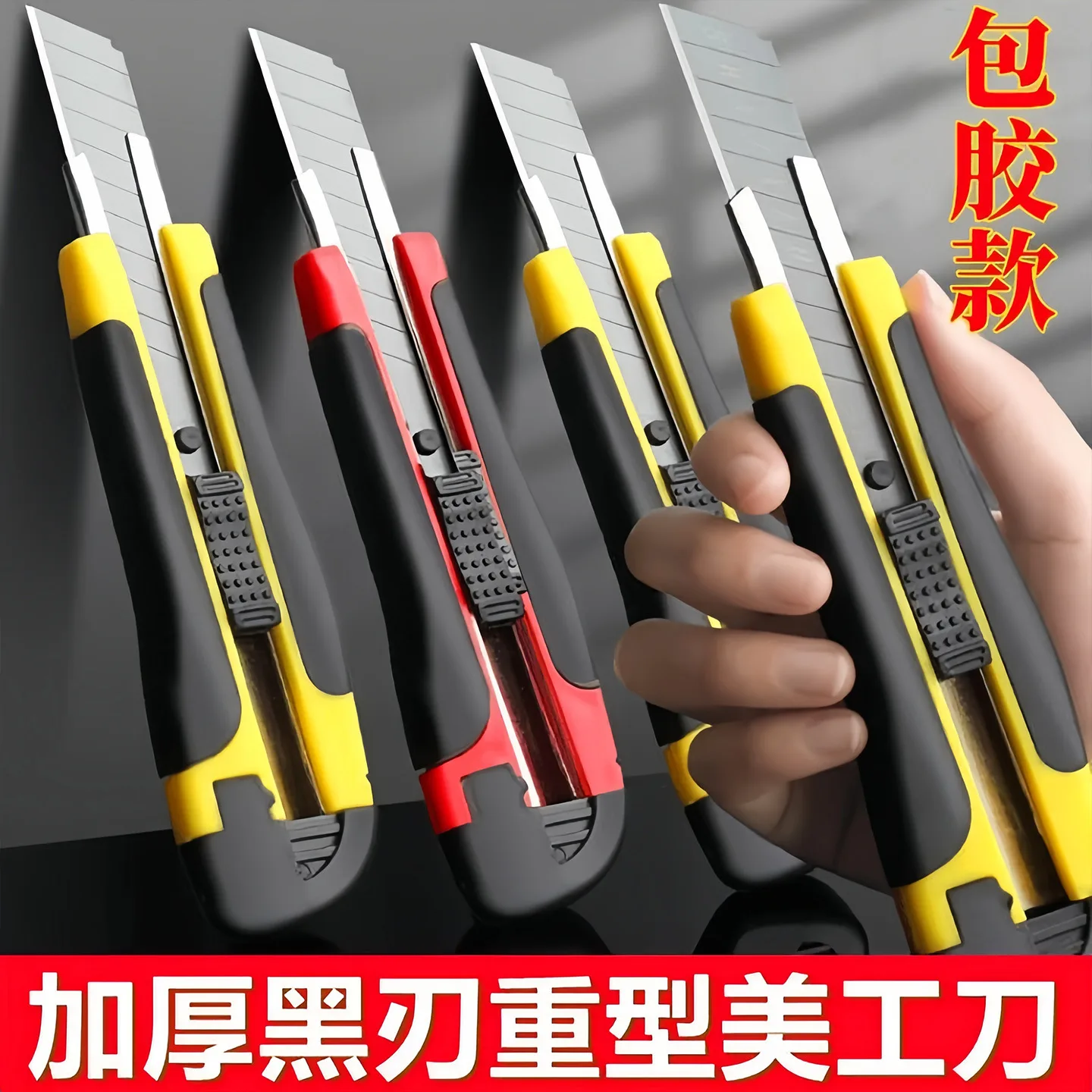
A utility knife cuts badly for two reasons: the blade is set too deep, and the cut is made toward the body. Both are technique problems rather than tool problems, and both are easy to fix. Set the blade so a single pass scores the material rather than splitting it, keep both hands behind the cut line, and most of what people blame on a cheap knife disappears. This guide covers blade depth, the direction of cut, and the material-specific habits that keep a utility knife accurate.
Four rules that decide whether a cut is safe
- Cut away from yourself, always. The blade should travel away from your body and away from the hand holding the material. If that means walking around the work, walk.
- Keep both hands behind the blade. A hand in front of the cut line is in the path of a slip, and a utility blade slips further than you expect before it stops.
- Set the shallowest depth that works. Only the tip of the blade needs to pass through the material. Extra blade equals extra leverage when it catches.
- Use more passes, not more force. Two or three light passes along the same line cut card, drywall and flooring faster than one heavy pass, because the blade stays in the score.
- Cut on a sacrificial surface. A scrap of board under the work keeps the blade away from the bench, the floor and your knee, and it protects the edge from grit.
Setting blade depth by material
| Material | Blade depth | Passes |
|---|---|---|
| Cardboard and cartons | Just through the board thickness | One or two |
| Tape and strapping | Tip only, angled flat to the surface | One |
| Plasterboard | Half the board thickness, square to the face | Two, then snap |
| Carpet and underlay | Full thickness, blade vertical, from the back | One, with a straight edge |
| Roofing felt and membrane | Full thickness, blade flat along a batten | One |
| Plastic sheet and film | Tip only, material pulled taut | One, light pressure |
Cutting technique per material
- Card and cartons. Cut with the flap held flat and the blade at a shallow angle so the tip runs in the flute of the board. Cutting through the corrugation is what makes a line wander.
- Drywall. Score once against a straight edge, then break the board away from the score. Trying to cut all the way through creates dust and a ragged face.
- Carpet. Cut from the back, with the pile facing down, using a straight edge and a single firm pass. Cutting from the face buries the blade in the pile and drags the tufts.
- Plastic sheet. Pull the sheet taut over a flat surface and score it, then bend it to run the score. A blade pressed through plastic sheet grabs and skates.
- Insulation and membrane. Cut along a batten or straight edge with the blade flat, using the longest part of the blade rather than the tip, so the line stays true over distance.
- Tape and banding. Lay the blade almost flat to the surface and pull the material against the edge. Cutting down through tape also cuts what is underneath it.
The utility knives in this guide
Common faults and what causes them
| What you see | Usual cause | Fix |
|---|---|---|
| Cut wanders off the line | Blade set too deep, or held at an angle | Retract to tip depth and keep the body square to the work |
| Blade snaps at the score line | Side load from levering or turning in the cut | Use a straight edge and stop to turn rather than steering the blade |
| Material tears instead of slicing | Blunt blade, or a blade with a chipped segment | Snap to a fresh segment or fit a new blade |
| Slider stiff and jerky | Adhesive and dust in the channel | Open the body and wipe the track and slider |
| Blade will not stay retracted | Worn spring or stretched clamp | Replace the knife; the body is the safety part |
When to change the blade
- When you start pushing. Pressure is the signal. A blade that needs weight behind it has already stopped slicing.
- After abrasive material. Drywall, cement board and carpet dull an edge faster than card, so check after those jobs rather than on a fixed schedule.
- After two or three segments. Once the exposed blade is short, the knife has to be tilted to reach the work and the cut stops tracking straight.
- Before a job, not during it. Fit a fresh blade when you set up, so a mid-cut change does not happen with the material half scored.
- Wipe before storing. Adhesive that dries in the channel is what turns a smooth slider into a jerky one.
Frequently Asked Questions
Can I cut drywall with a utility knife alone?
Yes, for a single layer. Score once with a straight edge, then snap the board over your knee or a batten. Thicker or fire-rated board usually needs a saw for a clean edge.
Why does my blade break so often?
Side load. Steering the blade in the cut, levering with the tip and cutting round corners all put bending force on the thinnest part of the blade. Straight cuts and a straight edge stop it.
Should I cut cardboard from the front or the back?
From the face that has the flutes running toward you, with the blade shallow. Cutting across the corrugation is what makes the knife jump out of the score.
Is a longer blade better for long cuts?
No. A long exposed blade flexes and wanders. A shallow setting and a straight edge give a truer line over distance than a fully extended blade.
How do I stop the knife dragging on tape?
Wipe the blade after every tape job. Adhesive on the flat of the blade adds friction in the cut and then dries in the channel and stiffens the slider.
Buying the right one
All of the technique above assumes a body that holds its blade square and retracts fully; the rest is how you use it. The utility knife in this range is a standard plastic-bodied pattern sized for the blade settings described here, and it takes the common replacement blades.