Blog
Car Emergency and Tyre Repair Kits: What to Carry


A car tool kit is insurance. It is carried for the day a warning light comes on, a tyre loses air on a motorway or a battery goes flat in a car park, and it is judged on whether the right tool is present at that moment rather than on how many pieces it contains. That makes the contents more important than the case, and it makes the tyre repair kit the single most valuable item in the boot. This guide covers the emergency and puncture repair kits in this range and what belongs alongside them.
What a roadside kit has to cover
- A puncture. The most common breakdown, and the one with a repair that can be done at the roadside with the right tool.
- A wheel change. A jack, a wheel brace and a torque figure. Most cars carry a jack, but many do not carry a brace that will actually shift a wheel nut.
- Lighting. A torch, and ideally a head torch, because breakdowns happen in the dark more often than in daylight.
- Battery. Jump leads or a booster pack, since a flat battery is the second most common reason a car will not start.
- Tools for the fixings on that car. Socket sizes vary by manufacturer, and a kit that does not cover the car’s own fasteners is decoration.
Kits in this range
| Kit | Covers | Note |
|---|---|---|
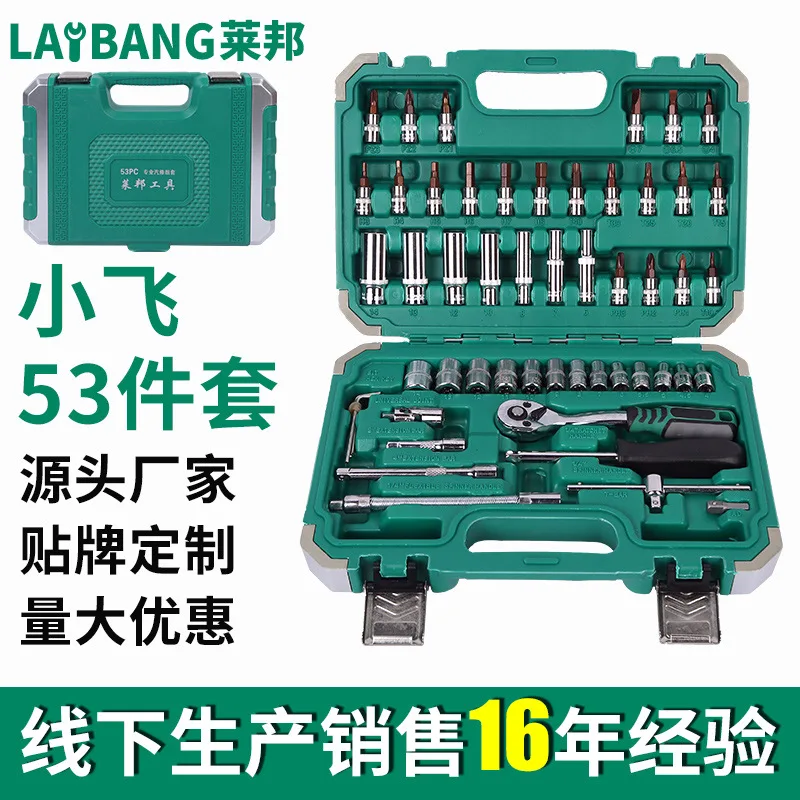
| Emergency tool kit | General roadside repair | Thickened steel tools in a portable case |
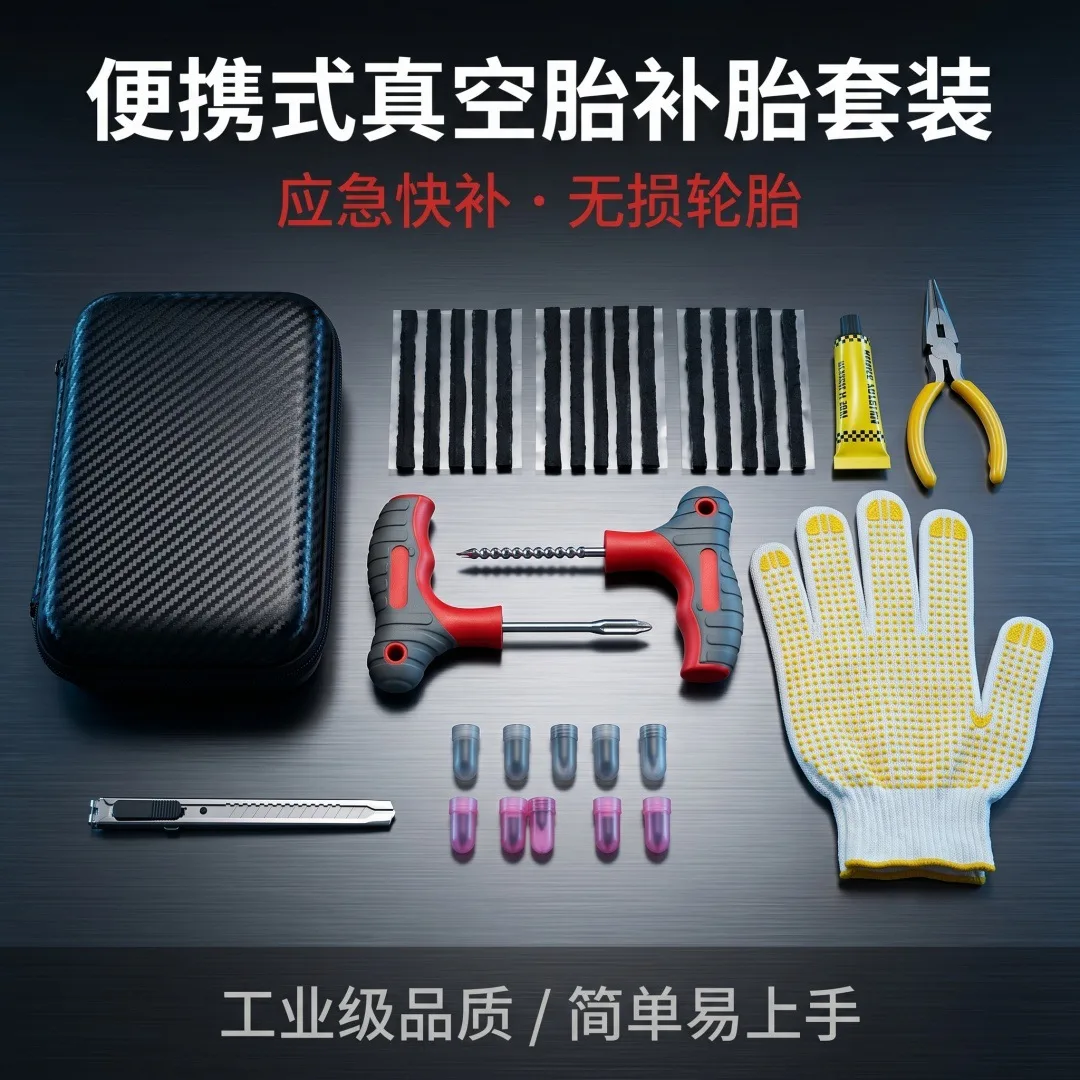
| Tyre puncture repair kit | Tubeless tyre puncture | Plugs, tools and reamer in one box |
An emergency tool kit
A portable car emergency tool kit in thickened steel for vehicle repair is the box that covers the jobs a driver can realistically do at the roadside: tightening a loose trim, removing a battery terminal, dealing with a hose clamp or freeing a seized bolt. Buy it for the tools it contains rather than the count on the label, and check that the sockets and spanners match the fasteners on your own car, because a kit that covers every size except yours is no kit at all.
Tyre puncture repair
A tyre puncture repair kit in 45 carbon steel for tubeless tyres is the tool that turns a slow puncture into a ten minute roadside job. The kit reams the hole, pushes a plug through it and seals the puncture from the inside of the tread, which is enough to reach a garage for a proper repair. The technique is short and worth knowing before it is needed: locate the object, remove it, ream the hole along its own direction rather than straight in, load the plug on the tool, push it in until the stem sits just above the tread, then withdraw the tool and trim the excess. Inflate to the correct pressure, and treat the plug as a temporary repair. Sidewall damage and large cuts are not repairable in this way and should not be attempted.
Using a kit at the roadside
- Get off the road first. Hazard lights on, handbrake applied, wheels steered away from traffic, and something visible behind the car before any tool comes out.
- Loosen wheel nuts before jacking. A nut that will not move when the car is on the ground will certainly not move once it is in the air.
- Use the jack on the correct point. Every car has a reinforced jacking point, and the sill beside it folds if the jack is placed wrongly.
- Check the spare. A spare at half pressure is the most common reason a roadside wheel change fails, and a tyre plug kit is useless without a way to inflate.
- Do not work in the road. If the job cannot be done safely at the kerb, wait for recovery. No repair is worth being struck by traffic.
What to add to a roadside kit
A kit is a starting point, and a few cheap additions make it far more useful. A proper wheel brace that fits the car, checked against the nut rather than assumed, is more valuable than any other single item. A tyre pressure gauge and a way to inflate, whether a foot pump or a 12 V compressor, make a plug repair into a completed repair. Gloves and a mat keep hands and clothes out of the grit. A small selection of fuses, a length of wire and insulation tape deal with the electrical faults that stop a car without stopping the engine. Ties, tape and a torch complete the set. Put the whole lot in one bag that lives in the boot, check it twice a year, and resist the temptation to borrow from it, because a roadside kit is only useful if it is complete when it is opened.
Frequently asked questions
Can a tyre plug be a permanent repair?
Treat a plug as a temporary repair to reach a garage. A proper repair is made from inside the tyre, and sidewall damage or a large cut cannot be plugged at all.
What size sockets does a car kit need?
It depends on the car. Check the wheel nuts and the common fasteners on your own vehicle before buying, because a kit that misses those sizes is useless when it is needed.
Do I need a torque wrench in the car?
For wheel nuts, ideally. If not, tighten in a star pattern and check them at the first opportunity, because over-tightened nuts distort discs and stretch studs.
How often should a car kit be checked?
Twice a year, along with tyre pressures. Check the spare pressure, the torch batteries and that nothing has been borrowed and not returned.
Are puncture repair aerosols a substitute for a kit?
They are a faster temporary fix but they contaminate the inside of the tyre and some tyre shops will not repair afterwards. A plug kit leaves the tyre repairable.
Where to start
Browse the full Car Tool Kits range, or the wider Tool Sets category if you also need socket sets, spanner sets, tap and die sets or kit boxes. Tell us the vehicle and what you want to be able to fix at the roadside, and we will point you at the kit and the tools that cover it.