Blog
Sealed Tool Cases: Gaskets, Catches and What They Keep Out

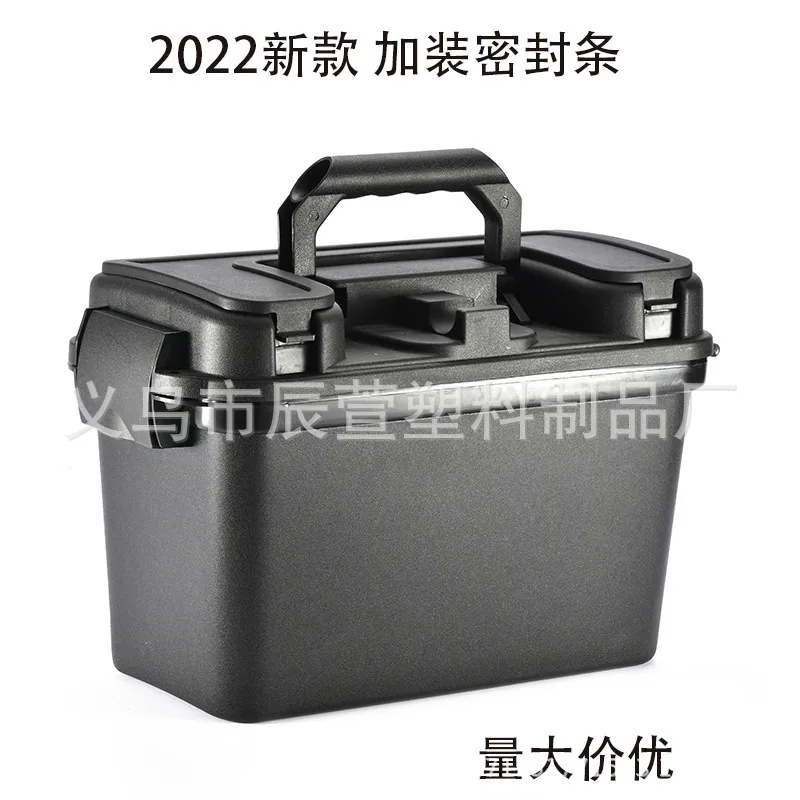
Sealing is the one feature on a tool case that cannot be added later. A moulded box with a gasket in the lid keeps out rain, dust, swarf and the fine grit that finds its way into every workshop, and it does so without any moving part that can be adjusted or repaired. Either the case seals or it does not.
This case measures 38 x 19 x 24 cm and is sold at $10.22. That size makes it a bench case rather than a hand box. This guide covers what a gasket actually protects against, what fits inside, and how to keep a seal working for years.
What a gasket does and does not do
A gasket is a closed loop of soft material that sits in a groove in the lid and is compressed when the case is latched. It blocks water, dust and grit. It does not make the case airtight in the way a pressure vessel is airtight, and it does not survive being cut by a sharp tool left standing in the box.
| Threat | Blocked by a gasket? | Note |
|---|---|---|
| Rain and splashes | Yes | The main reason to pay for a seal |
| Fine dust and grit | Yes | Keeps abrasive dust off bearings |
| Swarf and metal filings | Yes | Stops filings rusting into tools |
| Submersion | Partly | Rated cases handle this; general cases do not |
| Humidity in storage | Partly | Use a desiccant pack as well |
| Impact | No | A case protects shape, not shock |
The failure mode is nearly always mechanical. A sealed case stops sealing when the gasket is nicked, when grit is trapped on the sealing face, or when the lid is warped by heat. All three are avoidable, and all three are the reason a case should be inspected rather than simply closed.
What a 38 x 19 x 24 cm case holds
Those dimensions describe a case you carry with one hand and set down on a bench. It is deep enough for standing tools upright, which is what separates it from a flat box.
| Contents | Fits? | Note |
|---|---|---|
| Test instruments | Yes | Lay flat on a foam liner |
| Drill bits and taps | Yes, upright | Deep enough to stand them |
| Measuring tools | Yes | Better with a foam base |
| Spanners and sockets | Yes | Weight adds up quickly |
| A cordless drill | Yes, without the charger | Charger needs its own case |
| Long levels and rules | No | Need a case that matches the length |
The case suits equipment that has to stay clean rather than tools that have to stay together. Anything an operator carries from site to site and wants free of dust is a good match; a general hand tool kit is better served by a box with a tray.
Sealed tool cases in this range
Every option in this range
One size, one finish: a moulded case with a gasket in the lid, a heavy-duty catch and a moulded carry handle.
| Option | Detail | Price |
|---|---|---|
| 38 x 19 x 24 cm | Gasket in lid, heavy-duty catch, carry handle | $10.22 |
Because there is a single size, the question is not which variant but whether the length suits the equipment. Measure the longest item first, then check it can also be laid flat, since a case that takes a tool only on the diagonal is a case that takes it badly.
Keeping a seal working
- Wipe the sealing face clean before closing the case, as trapped grit scores the gasket.
- Latch both catches evenly rather than forcing one closed first.
- Do not leave sharp tool ends touching the gasket when the case is closed.
- Store a desiccant pack inside if the case is kept in a damp workshop.
- Keep the case out of a hot vehicle, since heat can warp the lid rim.
- Replace the gasket when it hardens; a stiff gasket stops compressing.
How to pack a case so the seal survives
A sealed case fails more often from the inside than from the weather. Tools left standing on their cutting edges will mark the gasket the first time the lid is pressed down, and a case packed above the rim will hold the lid open by a millimetre, which is enough to let water past.
| Packing mistake | What it does to the seal | Better habit |
|---|---|---|
| Sharp edge against the rim | Nicks the gasket | Lay sharp tools flat and inward |
| Contents proud of the rim | Holds the lid up | Close the lid on an empty rim |
| Grit in the groove | Scores the sealing face | Wipe the rim before latching |
| One catch closed first | Twists the lid | Close both catches together |
Packing for a seal is really packing for flatness. Anything that touches the rim when the lid comes down is a problem, and anything laid flat in the middle of the case is not. A closed-cell foam base does most of this work by stopping contents sliding outward as the case is carried.
One more point: a case that is opened on a windy site should be closed again as soon as the tool is out. Dust on the sealing face is the most common reason a case that sealed last month stops sealing this month, and it costs nothing to avoid.
Frequently Asked Questions
Is a sealed case waterproof?
It will keep out rain and splashes. It is not intended to be submerged, so do not treat a general moulded case as a dive case.
What is the gasket made of?
A soft rubber or rubber-like strip set into a groove in the lid rim. The exact compound matters less than keeping the sealing face clean and undamaged.
Can the case be locked?
The catch holds the lid. If the case has a padlock eye, a small padlock or a tie will stop the catches being opened in transit.
Will it float?
An empty case may float briefly, but a loaded one sinks. Treat flotation as an accident rather than a feature.
Is foam included?
This case is sold with the moulded liner. Closed-cell foam cut to size improves protection for instruments and is easy to add.
When a sealed case is the right buy
Buy a sealed case when the contents have to stay clean: instruments, measuring tools, electronics, bearings or anything that rusts. The sealed tool case in this range is sized for a bench load rather than a full kit.
If the contents are hand tools that get used daily and are never far from a van shelf, a conventional box with a tray will serve better and cost less. Sealing earns its money where dust and rain are the enemy, not where access speed is.