Blog
Plastering Trowels: Blade Lengths, Steel Types and Handle Choice

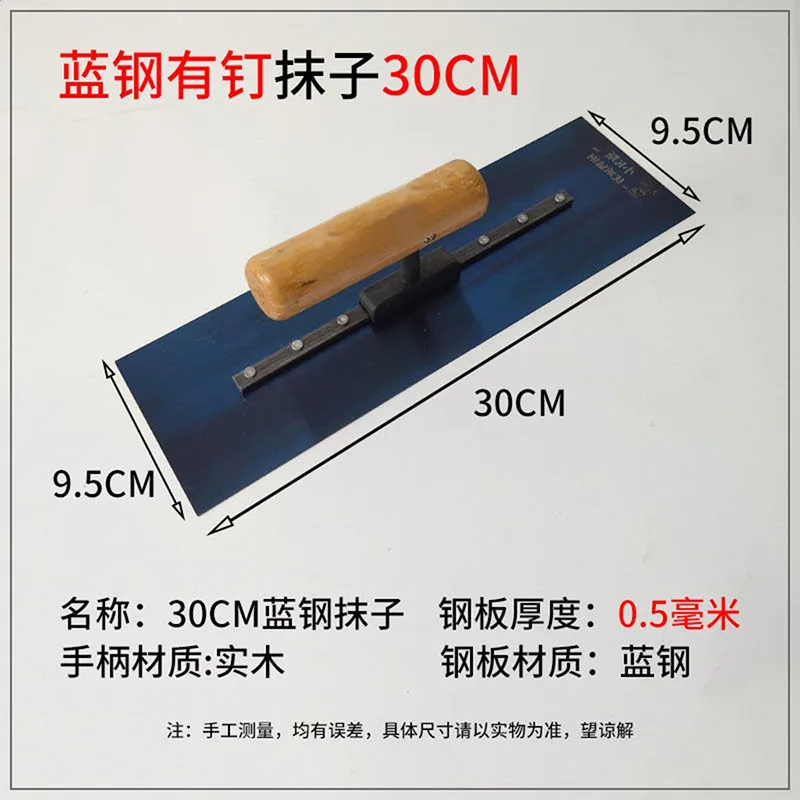
A trowel is the tool that decides how flat a wall ends up, and the two decisions that matter are the length of the blade and the steel it is made from. Everything else, from the handle shape to the rivets, follows from those two.
This range covers flat plastering trowels with wooden handles in 24, 26, 28, 30, 40, 50 and 60 cm blades, in blue steel, carbon steel and stainless, with notched versions from 8.99 dollars and plain blades from 16.18 to 26.97 dollars. This guide explains how to choose between them.
What blade length decides
A longer blade spreads material over a wider stroke, which is faster and easier on the shoulder but harder to control on an uneven surface. A shorter blade follows the wall and suits detailed and repair work, where a long blade would simply bridge the hollows.
| Blade length | Typical use | Why |
|---|---|---|
| 24 to 28 cm | Repairs, patching, small rooms | Controlled on short strokes |
| 30 cm | General skimming and finishing | The common all-round size |
| 40 cm | Larger walls and ceilings | Fewer passes, faster coverage |
| 50 to 60 cm | Rendering and wide open walls | Best on flat, large areas |
The 30 cm blade is the size most people settle on because it works on walls, ceilings and patches without being unwieldy. Longer blades are a specialist choice: excellent on a big flat wall, awkward in a stairwell, and tiring to hold at an angle for long periods.
Blue steel, carbon steel and stainless
Steel type affects how the blade wears, how it feels when new and how much maintenance it needs. It does not affect the finished flatness of the work, which depends on the user rather than the metal.
| Steel | Behaviour when new | Maintenance |
|---|---|---|
| Blue steel | Stiff, holds a straight edge early | Needs drying and oiling to resist rust |
| Carbon steel | Takes a keen edge, wears in quickly | Rusts if left damp; keep it wiped |
| Stainless steel | Softer feel, resists corrosion | Little maintenance; stays clean |
| Notched blade | Leaves a ribbed bed for tiles or render | Same care as the parent blade |
For work that involves water and cement, stainless steel removes most of the daily care. For a trowel used in dry conditions and stored indoors, blue steel and carbon steel give a stiffer blade at a lower price, and the trade-off is simply that they must be dried after use.
Plastering trowels in this range
Every option in this range
Flat plastering trowels with wooden handles, in blue steel, carbon steel and stainless blades. Prices are per trowel.
| Option | Detail | Price |
|---|---|---|
| 24 cm blade | Plain wooden handle | $18.43 |
| 26 cm blade | Plain wooden handle | $18.88 |
| 28 cm blade | Plain wooden handle | $19.33 |
| 30 cm blade | Plain wooden handle | $16.18 |
| 40 cm blade | Plain wooden handle | $26.97 |
| 50 cm blade | Plain wooden handle | $26.97 |
| 60 cm blade | Plain wooden handle | $26.97 |
| Small notched trowel | Notched blade, wooden handle | $8.99 |
| Large notched trowel | Notched blade, wooden handle | $10.79 |
The mid lengths sit in a narrow price band while the notched trowels cost less than the plain blades, which reflects what each tool is for: a notched trowel spreads adhesive, while a plain blade is used to finish a surface.
Keeping a trowel flat and true
- Clean the blade with a scraper and water before the plaster sets, never after.
- Dry the blade after cleaning; carbon and blue steel rust in hours when left damp.
- Oil a carbon blade lightly before storing it for a season.
- Store the trowel flat or hanging, never leaning on the blade edge.
- Do not use a finishing trowel to mix or to lever, which bends the blade out of flat.
- Check the blade against a straightedge occasionally and replace it once it dishes.
Matching the trowel to the material
Plaster, render and adhesive all behave differently under a blade, and the same trowel that finishes one well may be the wrong tool for another. The differences show up in how the material drags and how quickly it sets.
| Material | What the blade needs | Practical note |
|---|---|---|
| Gypsum finishing plaster | A flexible, well-worn blade | Finishing improves as the blade wears in |
| Cement render | A stiff blade and a clean edge | Stainless saves daily drying |
| Adhesive for tiles | A notched blade of even depth | Notches must be clean to bed evenly |
| Filler and repair compound | A short blade for control | Feathering matters more than speed |
Gypsum plaster is the reason plasterers keep an older trowel for finishing. A blade that has been worn in has a slightly rounded edge that feathers the material out to nothing, while a brand new blade leaves a sharper line that has to be worked again. Buying two trowels and rotating them as they wear is common practice.
Render is the opposite case. It is abrasive, it is applied in thicker beds, and it benefits from a stiff blade that does not flex away from the surface. That is where a carbon or blue steel blade earns its keep, provided it is dried and oiled at the end of the day rather than left in a bucket.
Adhesive work is a third discipline entirely. A notched trowel leaves ribs of a fixed depth, and those ribs have to be even or the tile will not bed down flat. A blade with a bent corner or a filled notch will leave a bed that looks right and fails later, which is why a notched trowel deserves to be kept clean and separate from the finishing tools.
Frequently Asked Questions
What is the best blade length to start with?
A 30 cm blade. It is long enough to skim efficiently and short enough to control on repairs and in small rooms.
Is stainless steel worth the extra?
It is where the trowel is used with water and cement, because it removes the daily drying routine. Indoors, a carbon or blue steel blade performs just as well.
What is a notched trowel for?
Spreading adhesive or render in ribs of a controlled depth so tiles or a top coat bed down evenly.
Can one trowel do everything?
For small jobs, yes. For anything larger, a 30 cm finishing blade plus a longer one for big surfaces is the practical pair.
How do I stop a blade rusting?
Wipe it dry after every use and keep it out of a damp van overnight. A light film of oil protects a carbon blade between jobs.
Choosing a trowel for the work in hand
Match the blade length to the size of the surface and the steel to the amount of water involved. The plastering trowel range here covers the lengths most work needs.
Where both a long and a short blade are wanted, buy the 30 cm first. It handles the majority of plastering work, and a longer blade is a tool to add once the surfaces being worked on justify it.