Blog
Floor Pumps and Foot Pumps: Which for a Bicycle


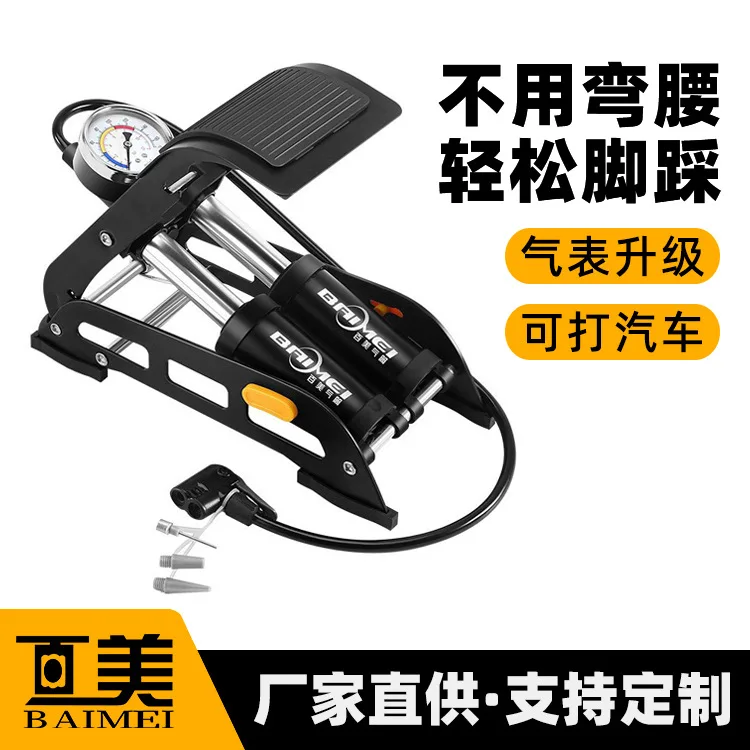
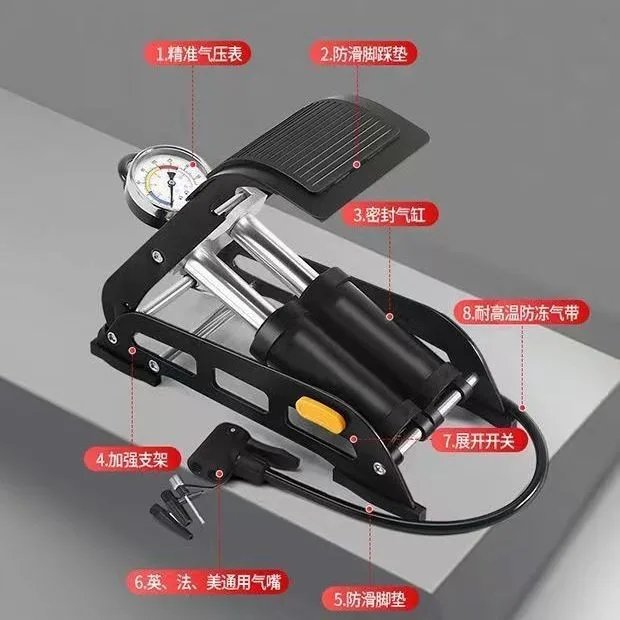
A floor pump and a foot pump solve the same problem in different ways. The floor pump stands tall, is held by the handle and worked with both arms; the foot pump lies or stands low and is worked with the weight of a leg. The choice between them comes down to which tyres are being filled and how much pressure is involved.
This range includes a floor-standing pump with a gauge rated to 160 psi. This guide compares the two designs honestly, because both have jobs they do better than the other.
Arms against legs
The arms are weaker than the legs, but they can work against a handle that is braced by the ground rather than against a plate under the body weight. That means a floor pump can use a narrow barrel and a long stroke to build high pressure comfortably, which is exactly what a road bicycle tyre needs.
| Attribute | Floor pump | Foot pump |
|---|---|---|
| Worked by | Both arms through a handle | One or both legs through a plate |
| Typical barrel | Narrow and tall | Wider and shorter, or twin |
| Pressure reached | High; the natural design for 100 psi and above | High on a narrow barrel, moderate volume otherwise |
| Volume per stroke | Moderate, with a long stroke | Larger on a twin barrel design |
| Stability | Very good; braced against the floor by a foot | Good, especially the horizontal layout |
| Storage | Tall; needs height | Low; fits under a seat or a shelf |
The rule that follows is straightforward. For high-pressure, low-volume tyres such as bicycle tyres, a floor pump is quicker and easier. For lower-pressure, higher-volume tyres such as car and van tyres, a foot pump with a wide or twin barrel does the job with less fuss.
Where each design belongs
The mistake is to buy one pump and expect it to be good at both ends of the range. Pressure work and volume work pull the design in opposite directions, which is why serious cyclists own a floor pump and workshops own a foot pump or a compressor.
| Job | Better pump | Reason |
|---|---|---|
| Road bicycle tyre at 100 psi | Floor pump | Narrow barrel and long stroke build pressure comfortably |
| Mountain bicycle tyre | Either | Pressure is low enough that a foot pump is fine |
| Car tyre top-up | Foot pump | Larger volume per stroke |
| Van or 4×4 tyre | Foot pump, twin barrel | Volume is the limiting factor |
| Ball or air bed | Foot pump with adapters | Volume work, low pressure |
| Presta valve on a road bike | Floor pump with a dual head | Designed for the narrow valve |
A workshop that looks after both bicycles and cars therefore tends to end up with two pumps, and that is not wasteful. Each one is used for the work it was designed around, and both last longer than a single pump pushed beyond its purpose.
Floor-standing pumps in this range
Every option in this range
A floor-standing pump with an iron barrel and a pressure gauge, finished in black, rated to 160 psi. The price is per pump.
| Item | Detail | Price |
|---|---|---|
| Floor pump, black | Iron barrel, gauge, 160 psi | $24.99 |
| Connector seal | Replacement part for the valve joint | small item |
| Presta adapter | For road bicycles with a narrow valve | small item |
The accessories matter here for the same reason they matter on any pump. A floor pump supplied with a Schrader head will not fit a road bicycle without an adapter, and the adapter costs far less than discovering the problem with a flat tyre on the morning of a ride.
Using a floor pump well
- Stand with one foot on the base to brace the pump before pulling the handle.
- Use a smooth, full stroke rather than short pumps at the top of the travel.
- Undo a Presta lock nut before fitting the head, and close it afterwards.
- Watch the gauge between strokes so the needle has settled before reading it.
- Keep the hose out of the way of the foot, so it is not trapped under the base.
- Coil the hose loosely for storage rather than folding it at the connector.
Pressure and the narrow barrel advantage
The reason a floor pump is comfortable at 100 psi is the same reason a foot pump with a wide barrel struggles there: the force needed to push the piston depends on the area of the piston and the pressure inside the barrel. A narrow barrel presents less area, so the same hand force generates more pressure. A wide barrel moves more air per stroke but asks for more force at the same pressure.
That single relationship explains almost every pump design on the market. Tall and narrow is for pressure; wide or doubled is for volume; and a pump described as an all-rounder is simply a compromise between the two that will do neither job as well as a specialist. Knowing which side of the compromise a tyre sits on is the whole of the buying decision.
The valve head is the part that decides daily frustration
Two pumps with identical barrels can differ enormously in use because of the head that grips the valve. A simple push-on connector works on a car valve and leaks on a Presta valve, while a dual head with a lever lock seals onto either without being held. Since the head is the part touched on every inflation, it is worth as much attention as the barrel when comparing pumps.
Replacement heads and hoses are available for most designs, so a pump with a good barrel and a tired connector does not have to be thrown away. Changing the hose and head assembly is a small job and restores the feel of the pump completely, which is a useful thing to know before retiring an otherwise sound pump.
Frequently Asked Questions
Is a floor pump better than a foot pump?
For bicycle tyres at high pressure, yes. For car and van tyres, a foot pump with a larger barrel is easier and quicker.
Can a floor pump inflate a car tyre?
It can, but the volume per stroke is small, so it takes a long time. It is better suited to topping up than to filling from flat.
Why is a floor pump easier at high pressure?
Because the barrel is narrow, so less force is needed for the same pressure, and the long stroke moves a useful volume each time.
Do I need a separate pump for each type of tyre?
Not strictly, but it works better. Pressure work and volume work pull the design in opposite directions, so one pump rarely does both well.
What gauge accuracy should I look for?
Enough to read the working range in clear steps. For bicycle tyres that means a scale readable to a few psi.
Choosing the right pump
Decide whether the work is pressure or volume, then buy the design that matches. The floor-standing pump in this range has an iron barrel and a gauge, rated to 160 psi.