Blog
Inflating Balls, Air Beds and Toys: Fittings and Pressure


A pump bought for car tyres will sit unused through most of the year unless it can also handle the football, the air bed and the paddling pool. Doing that takes two small adapters and a different idea of what the correct pressure is, because every one of those items is inflated far below tyre pressures.
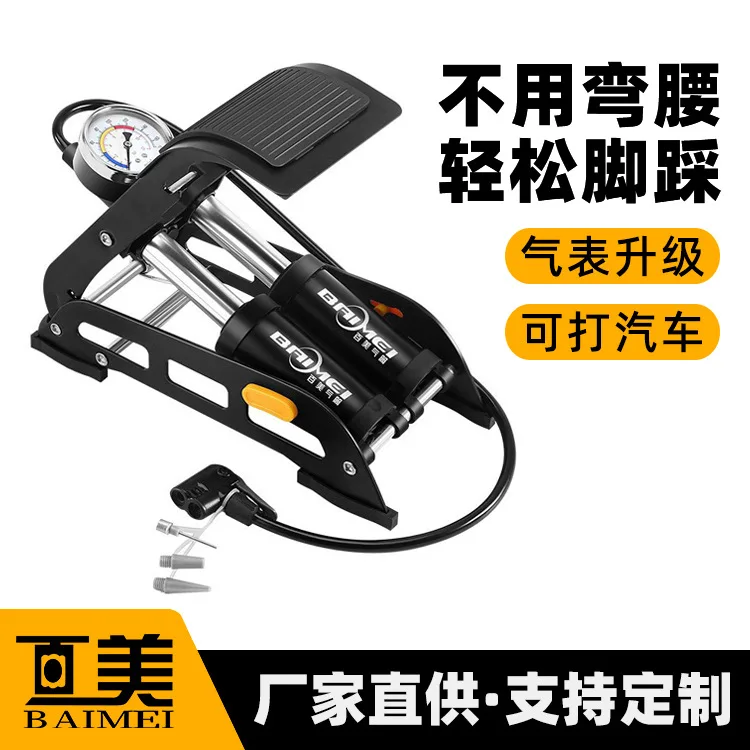
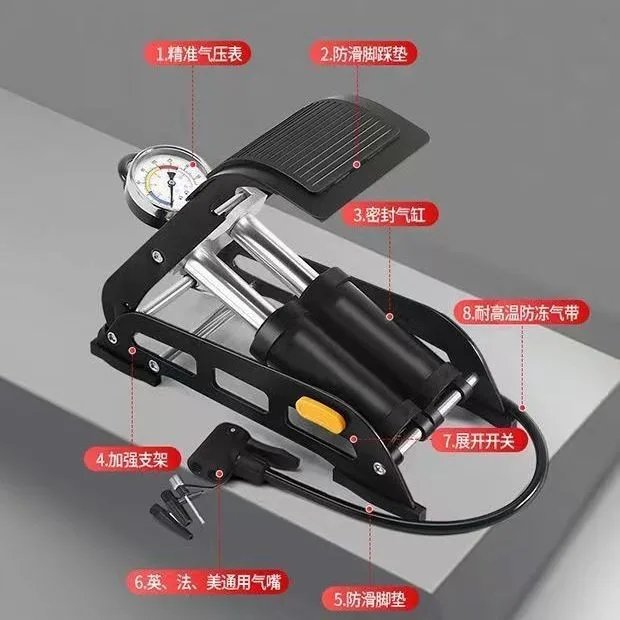
This range covers single and twin cylinder pumps with a gauge and a ball and toy adapter supplied. This guide explains the fittings and the pressure targets for the soft items, which is where most damage happens.
The fittings and what each one does
Tyre valves and inflatable fittings are different systems. A tyre valve is a spring-loaded core inside a threaded stem; a ball valve is a rubber opening that accepts a needle; an air bed usually has a wide opening with a flap that accepts a tapered nozzle. None of these will accept a tyre connector.
| Fitting | Fits | Typical items |
|---|---|---|
| Schrader connector | Threaded car-type valve | Tyres: cars, motorcycles, most bicycles |
| Presta adapter | Narrow road-bike valve | Road and performance bicycles |
| Needle | Rubber valve accepting a needle | Football, basketball, rugby ball, some toys |
| Cone or tapered nozzle | Wide opening with a flap | Air beds, pools, inflatable furniture |
| Wide nozzle | Large-bore valve | Some air beds and large inflatables |
The needle is the fitting people lose, and it is also the one that causes the most wasted effort. Pushing a needle into a ball valve without the adapter fitted simply lets the air out again, and the pump appears to do nothing at all.
Pressure targets that protect the item
The pressures involved here are far lower than most people expect, and over-inflation is the risk rather than under-inflation. A ball pumped until it feels hard by tyre standards is well above its rating, which strains the seams and makes it unpleasant to use.
| Item | Typical pressure | How to judge it |
|---|---|---|
| Football | Around 0.6 to 1.1 bar, roughly 8 to 16 psi | Firm under thumb pressure, not hard |
| Basketball | Around 8 to 9 psi | Bounces to about waist height when dropped |
| Air bed | Very low; judged by feel | Firm when pressed with a hand, not drum-tight |
| Paddling pool | Very low | Holds its shape without straining at the seams |
| Inflatable furniture | Very low | Comfortably firm under body weight |
The gauge is a rough guide for these items rather than a target, because the scales on tyre pumps are compressed at the bottom end where a few psi covers a lot of needle travel. Filling slowly and checking by hand is the reliable method, and it also stops the item being over-filled while attention is on the gauge.
Foot pumps for balls and inflatables in this range
Every option in this range
Single and twin cylinder foot pumps with gauges, ball and toy adapters supplied. Prices are per pump.
| Configuration | Cylinder | Suits | Price |
|---|---|---|---|
| Deluxe model with gauge | Single | Occasional use on tyres and soft items | $8.99 |
| Single cylinder, integrated gauge | Single | Regular tyre use plus balls and beds | $12.99 |
| Twin cylinder, dial gauge | Twin | Faster on large inflatables | $15.98 |
| Twin cylinder, integrated gauge | Twin | General use with a protected gauge | $17.98 |
| Twin cylinder, metal gauge | Twin | Frequent use where a clear dial helps | $18.65 |
Volume matters more than pressure for the soft items, so a twin cylinder pump is quicker on an air bed and a pool. A single cylinder pump is perfectly adequate for balls, where the volume is tiny and the pressure modest, and it is the cheaper way to cover the occasional inflatable.
Inflating soft items without damaging them
- Wet a needle slightly before pushing it into a ball valve, so it enters without tearing the rubber.
- Inflate a ball in short bursts and check by hand, rather than filling until it feels hard.
- Fill an air bed with the valve open fully, since a partly closed valve slows the work and heats the pump.
- Stop as soon as an inflatable is firm; seams and valves fail from over-inflation, not from under-inflation.
- Close every valve cap and flap fully, since a slow leak is more common than a puncture.
- Keep the adapters with the pump, or they will be missing when the ball needs air.
Cold weather, soft plastic and stored inflatables
Inflatables stored in a cold shed become stiff, and a stiff valve is far easier to damage than a warm one. Bringing a ball or an air bed indoors for a while before inflating it, and letting the pump warm up too, prevents torn valves and split seams that are otherwise blamed on the pump. A cold pump also delivers less per stroke, because the seals stiffen.
Stored air beds should be kept slightly inflated rather than folded completely flat, since a crease that is pressed hard for months becomes a weak line. Where an inflatable has been stored folded, inflating it part way and leaving it for a few minutes before finishing lets the material settle and reduces the strain on the seams at the corners.
Adapters are the cheapest way to extend a pump
Almost every complaint about a pump failing to inflate something turns out to be a missing adapter rather than a fault in the pump. A needle costs very little and turns a car pump into a ball pump; a cone nozzle does the same for an air bed. Buying both at the same time as the pump, and keeping them attached to the hose rather than in a drawer, is the difference between a pump that covers a household and one that only covers its tyres.
It is worth checking the fittings on everything in the house once, in a single pass, and noting which are threaded valves and which are push-fit openings. That short exercise usually reveals one item nobody remembered, and prevents the situation where a pump and a deflated pool are on the lawn with no way of joining them together.
Frequently Asked Questions
Can I use a tyre pump for a football?
Yes, with a needle adapter. Without it, the pump will not connect to the ball valve at all.
What pressure should a football be?
Usually around 0.6 to 1.1 bar, about 8 to 16 psi. That is far below a tyre pressure and the ball should feel firm, not hard.
Why does my ball go soft straight away?
Either the needle was not fully inserted, or the valve has been damaged by forcing the needle in at an angle.
Can a foot pump inflate an air bed?
Yes, with a cone nozzle. A twin cylinder pump is noticeably quicker because the volume is large.
Is it possible to over-inflate an inflatable?
Yes, and it is the usual cause of seam failure. Fill until firm under hand pressure and then stop.
Choosing the right pump for soft items
Choose the volume for the largest inflatable you own, and make sure the adapters are included. The single and twin cylinder foot pumps in this range come with ball and toy adapters.