Blog
Choosing a Tool Box: Material, Tray, Latch and Size


Tool boxes are sold on size and colour, and offered in a range so wide that the choice seems arbitrary. In practice four things decide whether a box suits the work, and they are best considered in a fixed order: what the box is made of, whether it has a tray, how the latch works and how big it needs to be.
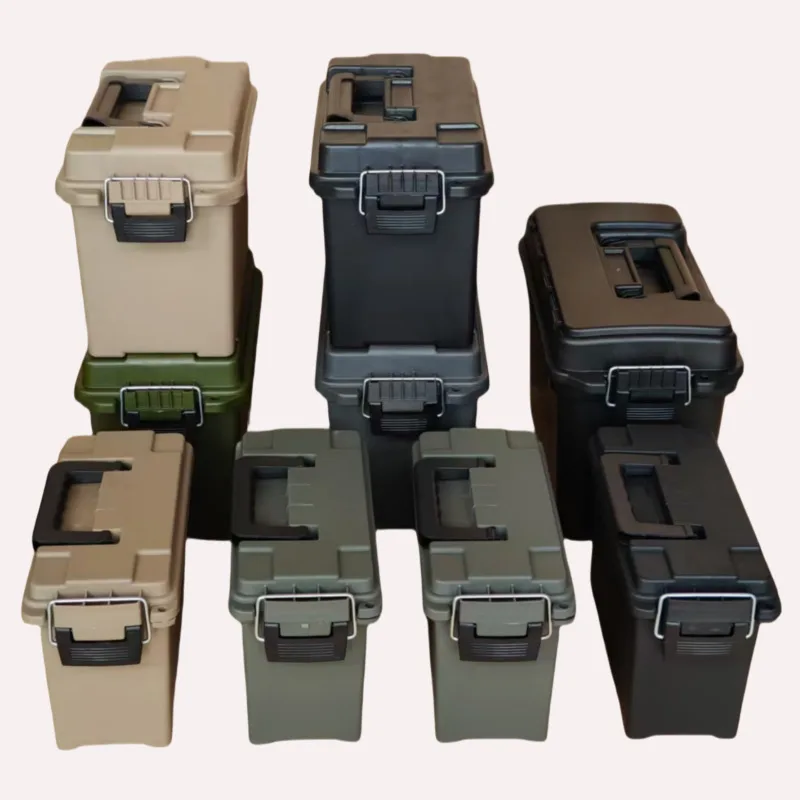
This range covers a moulded impact-resistant box with a lift-out tray in four finishes at $10.59. This guide works through the four decisions using it as the example.
First: the material
A tool box is dropped, stood on, left in a cold vehicle and loaded beyond what the owner intended. Material decides which of those it survives. Moulded impact-resistant plastic flexes and recovers; a brittle plastic cracks at the hinge lugs, which is the end of the box. Steel is stronger but heavier and rusts where the paint is damaged.
| Material | Weight | Behaviour when abused | Best for |
|---|---|---|---|
| Impact-resistant moulded plastic | Light | Flexes and recovers; cracks only after severe impact | General workshop and vehicle use |
| Standard plastic | Light | Brittle; cracks at hinge mouldings | Occasional household use |
| Sheet steel | Heavy | Dents rather than cracking; rusts once painted is damaged | A box that stays in one place |
| Fabric bag | Lightest | No rigidity, but folds and absorbs knocks | Tools carried on a belt or in a vehicle |
For most workshops the answer is a moulded impact-resistant box, because it survives being knocked around without adding the weight of steel to everything carried in it. Steel earns its place where the box will sit in one spot and take heavy loads.
Second: the tray
A lift-out tray turns a single deep space into two levels, and it is the difference between a box that stays organised and one that becomes a container of loose metal. Small parts and the most-used tools belong on the tray; the heavier tools belong underneath, where their weight keeps the box stable.
| Tray | Advantage | Drawback |
|---|---|---|
| Lift-out tray | Two levels; small parts stay findable | Takes up a good part of the depth |
| Fixed tray or divider | Permanent separation | Cannot be removed to fit a larger tool |
| No tray | Maximum usable depth | Everything settles to the bottom |
| Removable organiser | Adjustable compartments for small parts | Another loose item to keep track of |
A removable tray is worth having because it can be taken out when a large item has to go in the box, which is the usual reason a tool box ends up being too small. A fixed divider is tidier but less adaptable, and no tray at all is only sensible for a box that holds a single tool.
Tool boxes in this range
Every option in this range
Moulded impact-resistant plastic boxes with a hinged lid, a catch and a lift-out tray, in four finishes. Prices are per box.
| Finish | Detail | Price |
|---|---|---|
| Green | Lift-out tray, positive catch | $10.59 |
| Camel | Lift-out tray, positive catch | $10.59 |
| Grey | Lift-out tray, positive catch | $10.59 |
| Black | Lift-out tray, positive catch | $10.59 |
All four finishes cost the same, so the decision is about the box rather than the colour. Where several boxes are used for different kits, different colours are a practical way to tell them apart at a glance, which is worth more than it sounds when a van is loaded.
Third and fourth: latch and size
- Choose a positive catch with a lip over a friction snap, since the catch carries the load when the box is lifted.
- Test the catch by closing the box and lifting it by the handle before buying.
- Measure the longest tool and allow for the tray above it, which is the space most often forgotten.
- Buy the smallest box that holds the kit, because a box that is carried is a box that gets used.
- Buy a second box rather than one oversized one, so heavy and light tools are separated.
- Check the hinge alignment: a lid that needs pushing to close will wear the catch out quickly.
The mistakes that make a box useless
The first is buying by capacity alone. A box that holds everything is a box that is never carried, and the tools in it are the ones used most rarely. The second is ignoring the tray, which leads to a box where small parts disappear into the base within a month. The third is loading a box so that the heaviest tools sit on top, which makes it unstable and puts the load through the catch instead of the base.
All three are avoidable by making the four decisions in order. Material decides whether the box survives; the tray decides whether it stays organised; the latch decides whether it stays closed; and size decides whether it gets used at all. Colour, which is the thing most boxes are sold on, decides nothing.
What a tool box should not be asked to do
A tool box is a container, not a work surface and not a step. Standing on a closed box is the commonest way to crack a lid or a hinge lug, because the load goes into the plastic rather than through the base. Using the box as a bench for sawing or drilling has the same result over time: the lid takes loads it was never designed for and eventually fails at the corner.
It is also a poor place for anything damp. A closed plastic box traps moisture, so a wet tool put away for the night corrodes in an enclosed space where the air cannot move. Wiping tools down before they go back in the box, and leaving the lid ajar in a damp workshop, keeps both the tools and the box in better condition than any amount of cleaning afterwards.
Frequently Asked Questions
What should I look for first in a tool box?
The material and the latch, in that order. Those decide whether the box survives being carried and dropped. Size and colour matter less.
Is a tray worth having?
Yes. A lift-out tray doubles the usable organisation and keeps small parts findable, and it can be removed when a larger tool has to go in the box.
Plastic or steel?
Moulded impact-resistant plastic for a box that is carried; steel for a box that stays in one place and takes heavy loads.
How big should a tool box be?
Large enough for the longest tool plus the tray, and small enough to carry. If it is too heavy to lift comfortably, it is too big.
Do different colours cost more?
Not in this range. Colour is a way to tell kits apart, not a price difference.
Choosing the right box
Work through material, tray, latch and size, and leave colour until last. The moulded tool box in this range has a lift-out tray and a positive catch in four finishes.