Blog
Diamond Sharpening Stones: Grit, Plate Size and How to Keep an Edge


A dull edge costs more than it looks. A blunt chisel bruises timber instead of cutting it, a dull knife slips instead of slicing, and a tired drill or router bit burns its way through a job that should take seconds. Diamond sharpening stones are the most direct way to fix that, because they cut fast, stay flat and work on steel that would glaze an oilstone. This guide covers the diamond sharpeners we stock, what grit actually does, and how to choose between a pocket sharpener and a bench plate.
Why diamond rather than an oilstone or waterstone
Diamond sharpening surfaces use industrial diamond particles bonded to a steel or plastic plate. Three practical consequences:
- They cut fast on hard steel. Tool steel, HSS and carbide-tipped tooling are all within reach; a natural stone struggles with the same materials.
- They stay flat. A dished stone cannot produce a flat bevel. Diamond plates resist dishing because the abrasive is bonded rather than worn away.
- They work dry or with water. A splash of water keeps the swarf moving; oil is not required, which makes them easier to use at the bench and easier to clean.
The trade-off is that diamond plates are abrasive to the point of being unforgiving: a few strokes too many will remove more metal than you intended, so light pressure and a consistent angle matter more than with a stone.
Grit: what the numbers mean
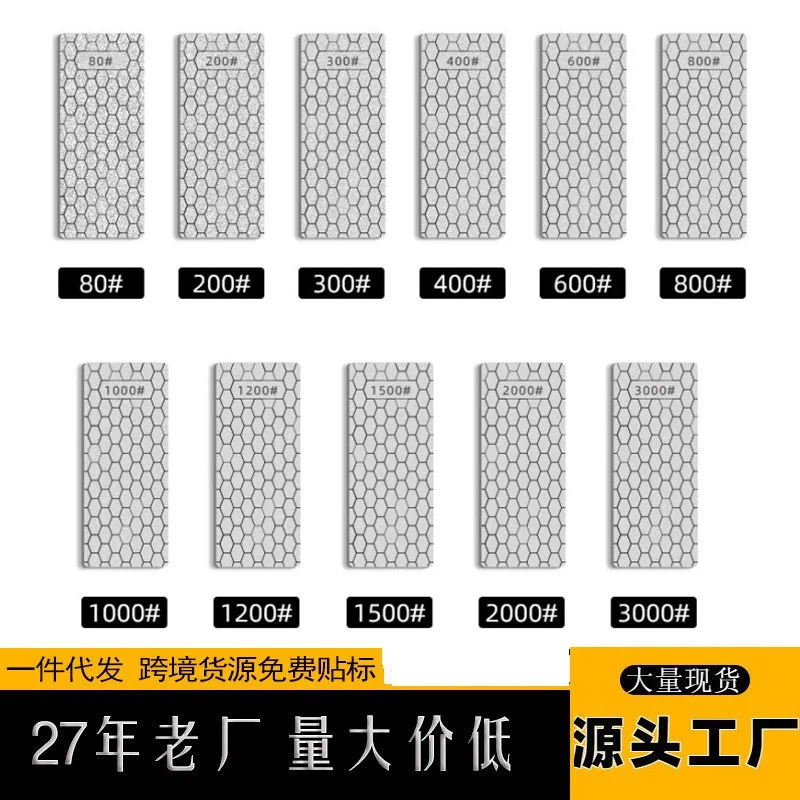
Grit describes the particle size, and therefore how much metal the plate removes. Our diamond range runs from 80 grit to 3000 grit, and the numbers behave the way you would expect: lower removes faster, higher polishes finer.
| Grit range | Role | Typical use |
|---|---|---|
| 80 – 240 | Coarse | Reprofiling a damaged edge, taking out nicks, flattening a chisel back |
| 300 – 600 | Medium | Restoring a working edge, everyday sharpening |
| 800 – 1200 | Fine | Refining, removing the burr, preparing for honing |
| 1500 – 3000 | Extra fine | Polishing to a mirror finish, carving tools, fine knives |
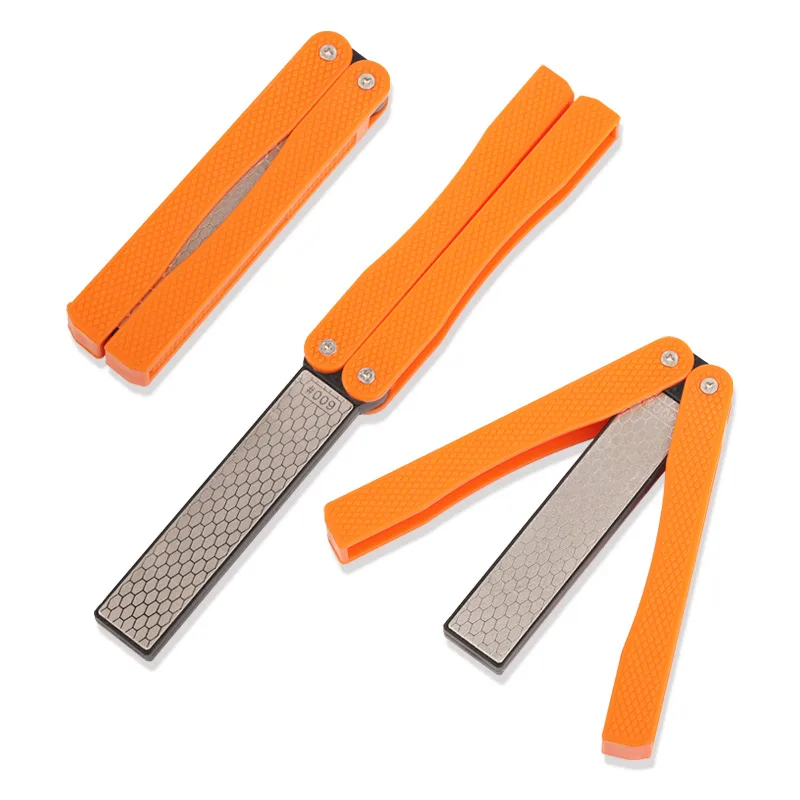
A double-sided plate in 400 and 600 grit, like the folding double-sided pocket sharpener, covers the two most-used grades in one tool. A wide-range plate such as the DMD diamond stone covering 80 to 3000 grit on a 150 x 63 mm plate gives the full progression without buying four separate stones.
Plates, pads and pocket sharpeners
Bench plates
A bench plate is a flat, rigid diamond surface you lay on the bench. Plate size decides how much of a wide blade you can sharpen in one stroke and how stable the stone feels. The standard sizes in our range are around 150 x 60 mm for general work and 200 x 70 mm for wider blades and longer strokes:
- Single-sided diamond plate, 150 x 63 mm, 200 to 3000 grit
- Single-sided diamond plate, 200 to 3000 grit, models 1452 and 1453
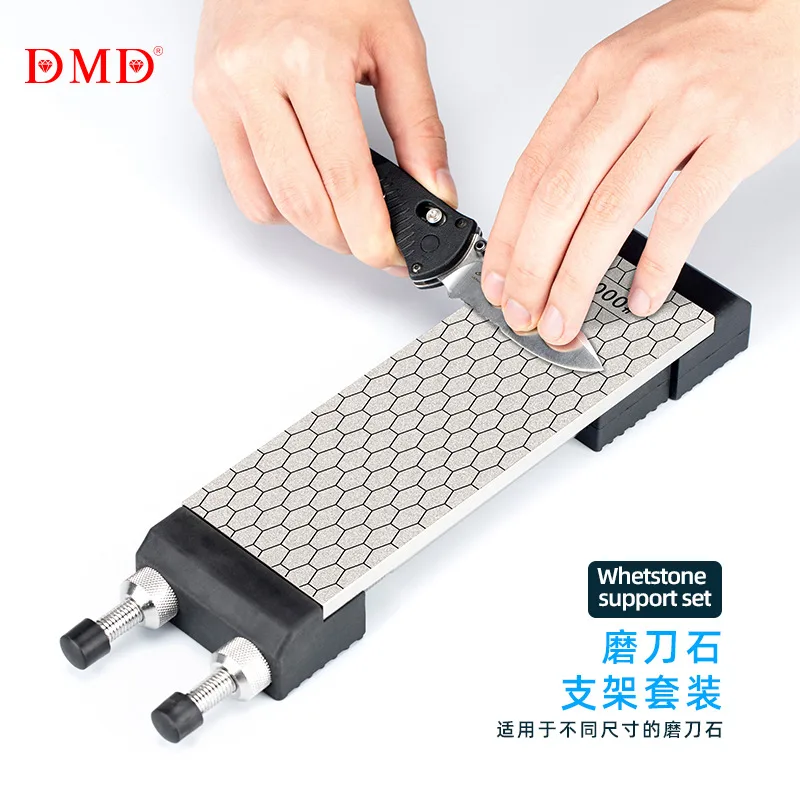
- Diamond stone, 200 x 70 x 8 mm, with base and angle holder
- Diamond honeycomb pad, 150 x 60 mm, 80 to 3000 grit
- Titanium-coated honeycomb pad, 151 x 63 mm
- Titanium-coated double-sided whetstone
- DMD ceramic sharpening kit
The angle holder in the 200 x 70 mm set is worth noting: holding a consistent angle by hand is the hardest part of sharpening, and a holder removes that variable.
Pocket and field sharpeners
For knives used outdoors, in a workshop drawer or in a kitchen, a small folding sharpener is the practical answer. The folding pocket sharpener, the 225 x 30 mm folding fan sharpener and the fan-shaped double-sided sharpener all give two grades in a tool that fits a pocket. They are the right choice when the alternative is not sharpening at all.
Guided and fixed-angle sharpeners
If you want a repeatable edge without learning freehand technique, a guided sharpener is the shortcut. The fixed-angle knife sharpener with three diamond stones sets the angle for you across three grades, and the five-slot handheld sharpener in 400 and 1000 grit handles kitchen knives in a few strokes. Both trade ultimate control for consistency, which is the right trade for most households.
Sharpening technique that works with diamond
- Light pressure. Diamond cuts on contact. Pressing harder wears the plate and rounds the edge instead of sharpening it.
- Consistent angle. Pick an angle and hold it. Most workshop edges sit between 20 and 30 degrees per side; kitchen knives are usually finer.
- Count your strokes. Alternate sides evenly, otherwise the edge drifts off centre.
- Raise a burr, then remove it. Work one side until you feel a burr along the whole edge, then do the same on the other side, then move to a finer grade to remove the burr.
- Keep the plate clean. Rinse it and wipe the swarf off; a loaded plate stops cutting and starts polishing.
Care and lifespan
A diamond plate lasts for years if it is used with light pressure and cleaned. Two things shorten its life: heavy downward force, which strips the diamond from the bond, and using it on ceramic or carbide inserts with the same force you would use on steel. Store plates dry and separate from other tools so the surface is not chipped by something harder than the bond.
Frequently asked questions
What grit should I start with?
If the edge is damaged, start at 200 to 300 grit to restore the profile, then finish at 600 to 1000. If the edge is only tired, start at 400 to 600 and finish finer. Buy a double-sided plate if you are not sure.
Can I sharpen a chisel or plane iron on a diamond stone?
Yes, and diamond is an excellent choice for it, because flattening the back of a chisel or plane iron needs a stone that stays flat. Use a coarse grade for the back, a medium grade for the bevel, and a fine grade to finish.
Do diamond stones need oil or water?
Water is enough, and only to carry swarf away. Some sharpeners are used completely dry. Oil is not recommended on most diamond plates because it can soften the bond.
Why has my diamond stone stopped cutting?
It is almost certainly loaded with metal swarf. Scrub it with water and a stiff brush. If it still will not cut after cleaning, the diamond has been stripped by too much pressure.
How long does a diamond sharpening stone last?
Years of normal use, which is why they work out cheaper than replacing oilstones. Treat it as a long-life tool and it will outlast several knives.
Where to start
Browse the full sharpening stones range, or the wider Abrasives category for grinding discs, sandpaper and mounted points. Tell us what you sharpen and how often, and we will match the grit progression and plate size to it.