Blog
Drill Bits: Point Angle, Coatings and Choosing by Material

A drill bit is a cutting tool with a geometry, and the geometry decides whether it cuts a round hole or a triangular one, whether it clears the swarf or packs it, and whether it survives the material at all. Buying bits by diameter alone is how a set of twenty dulls on the first stainless steel bracket. This guide covers the drill bits and countersinks we stock and how to match the point, the flute and the material.
The parts of a drill bit that matter
- Point angle. 118 degrees is the general-purpose point for steel and timber. 135 degrees is stronger and better on hard or work-hardening material, and it walks less on a curved surface.
- Material. HSS for steel and general work, cobalt HSS for harder and hotter cutting, solid carbide for abrasive material and for thin sections where rigidity matters.
- Flute form. The flute clears the swarf. A packed flute generates heat, and heat is what kills a drill bit long before the edge wears.
- Geometry. A twist drill makes a round hole. A step drill enlarges an existing hole, and a centre drill starts a hole exactly where a punch marked it.
Bit types and where each belongs
| Bit | Material | Note |
|---|---|---|
| HSS twist drill | Steel, aluminium, timber, plastic | The general-purpose bit |
| Solid carbide twist drill | Abrasive and hard material, thin sections | Holds size, but brittle if side-loaded |
| Multi-material bit | Tile, marble, glass, concrete | Different geometry from a metal bit |
| Centre drill | Starting an accurate hole | Rigid, short, and does not wander |
| Countersink | Chamfering a hole for a screw head | Needs the correct angle for the screw |
Carbide bits for hard material
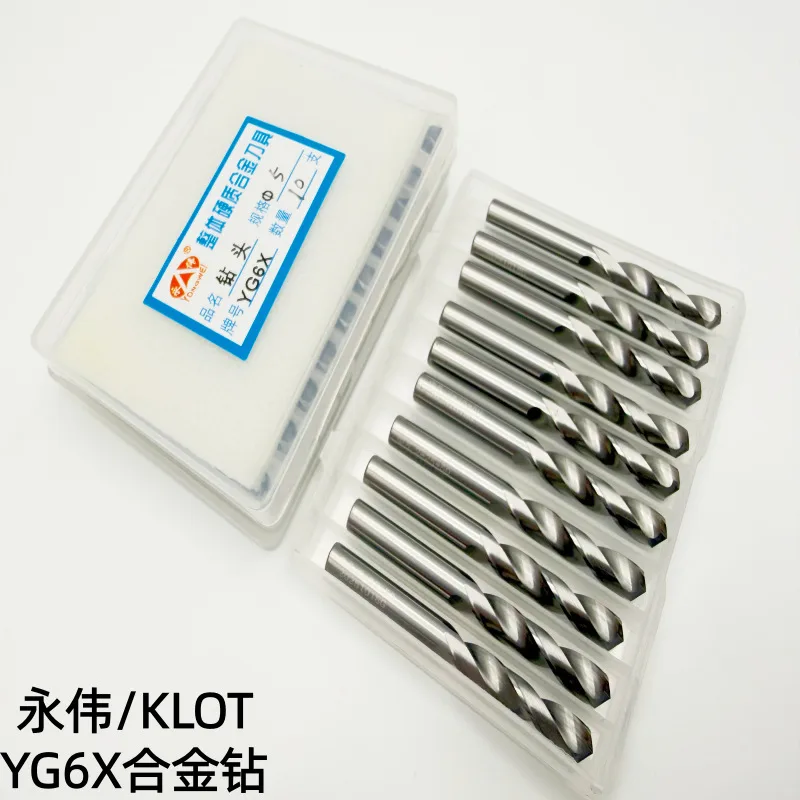
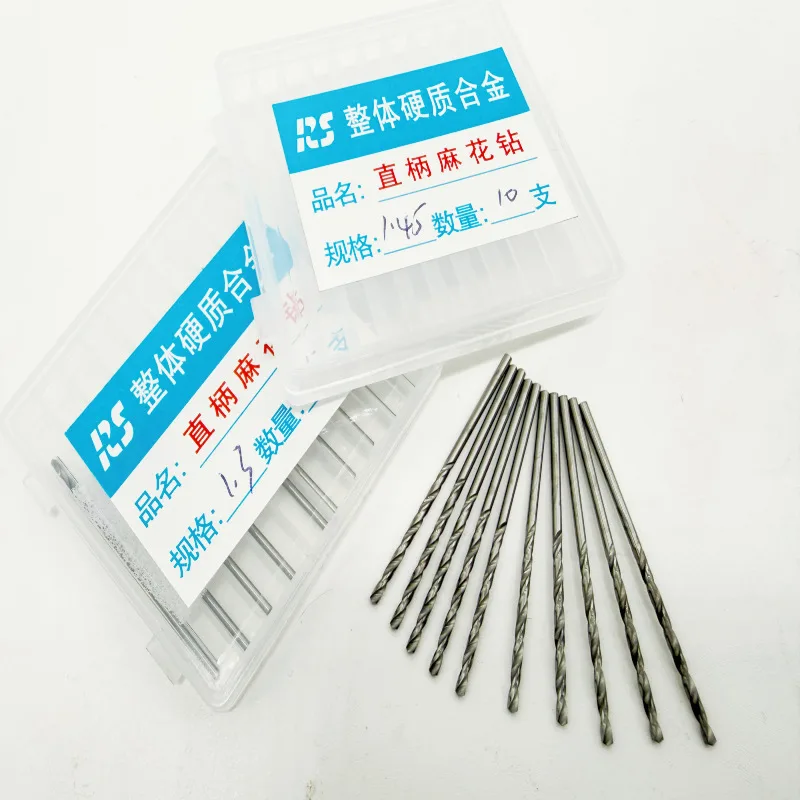
A solid carbide twist drill in 38 to 50 mm holds its diameter far longer than HSS in abrasive material, which is why it is the bit for long runs of holes in composite, tile and hard plastics. An extra-long solid carbide drill bit reaches through a deep web or a recessed fixing where a standard length cannot, and the carbide shank is what stops the bit flexing over that length. Carbide is brittle: it tolerates high cutting speed but not side load, so the workpiece must be clamped and the drill must go in straight.
Multi-material bits for building surfaces
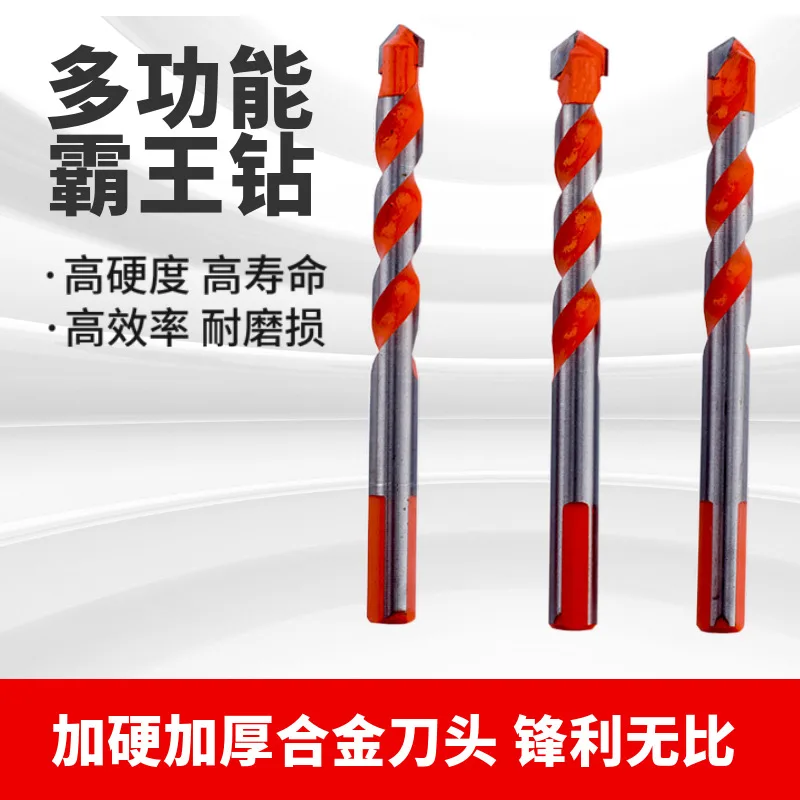
A multi-material drill bit set from 6 to 12 mm for tile, marble, glass and concrete uses a different point and a different cutting action from a metal bit, because a twist drill will skate across glaze and then crack the tile. The set covers the range of fixings a tiler or a fitter uses, and the important habit is to keep these bits separate from metal bits so the tips do not blunt on steel.
Centring, countersinking and deburring
An HSS centre drill and countersink set from 3 to 20 mm in 90 and 60 degrees, TiN coated covers the two jobs that come before and after drilling: starting a hole exactly on the mark, and chamfering it so a countersunk screw sits flush. The coating reduces friction and heat, which is what keeps the cutting edge alive over hundreds of holes. A deburring and chamfer tool with a hex or triangular shank removes the burr from the far side of a drilled hole, which matters anywhere a hand will touch the edge or a coating has to cover it cleanly.
Speed, feed and the heat problem
Drilling generates heat, and heat is the failure mode. The rules are simple enough to remember. Run a large bit more slowly than a small one, because the rim speed at the cutting edge rises with diameter. Use cutting fluid on steel, and use the right fluid: a lubricant for steel, nothing oily on cast iron, and a lubricant rather than a coolant on aluminium because aluminium clogs a dry flute. Clear the flutes often by lifting the bit out of the hole, and let the drill cut rather than pressing it through. A drill that is squealing is a drill that is rubbing, and a drill that is smoking has already lost its edge.
Why holes come out oversize, out of round or off position
- No pilot mark. The bit wanders. Centre punch the position, or start with a centre drill.
- Uneven flutes. A bit sharpened by hand with unequal lips drills oversize. Replace or sharpen properly.
- Poor clamping. A workpiece that moves as the bit bites produces an oval hole and often a broken bit.
- Wrong point angle. A 118 degree point on hard material rubs rather than cuts, which work-hardens the surface and makes the next attempt harder.
Getting a long life out of a drill bit
Bits die from heat far more often than from wear, and heat comes from speed, pressure and packed flutes. Keep the speed down as the diameter goes up, clear the swarf often, use the right lubricant, and stop pressing when the bit stops cutting. A bit that is cutting cleanly produces two even spirals of swarf; a bit producing dust or fine chips is rubbing, and its edge is already gone. Store bits so the points cannot touch each other, and keep coated and uncoated sets apart, because a bit that has been used on masonry never cuts steel again.
Frequently asked questions
What is the best all-round drill bit?
An HSS twist drill with a 118 degree point covers steel, aluminium, timber and plastic. Add cobalt or carbide only when the material demands it.
Can I use a wood bit on metal?
No. Wood bits have a different point and no edge geometry for metal. They blunt and burn almost immediately.
Why does my drill bit wander on a curved surface?
Because the surface has no flat to start on. Centre punch the position and start with a centre drill, or use a bit with a 135 degree split point.
How do I drill tile without cracking it?
Use a bit intended for tile, run it slowly without hammer action, and keep the bit cool. Do not press hard, and start with the tip angled until it bites.
Should I use oil when drilling?
On steel, yes, and on aluminium a lubricant helps clear the flute. On cast iron, drill dry, because the graphite in the iron is its own lubricant.
Where to start
Browse the full Drill Bits range, or the wider Cutting & Measuring Tools category if you also need saw blades, squares or gauges. Tell us the material, the hole diameter and the depth, and we will point you at the point angle, material and length that fit.